Research Duration
8 Weeks
Hilton Hotels
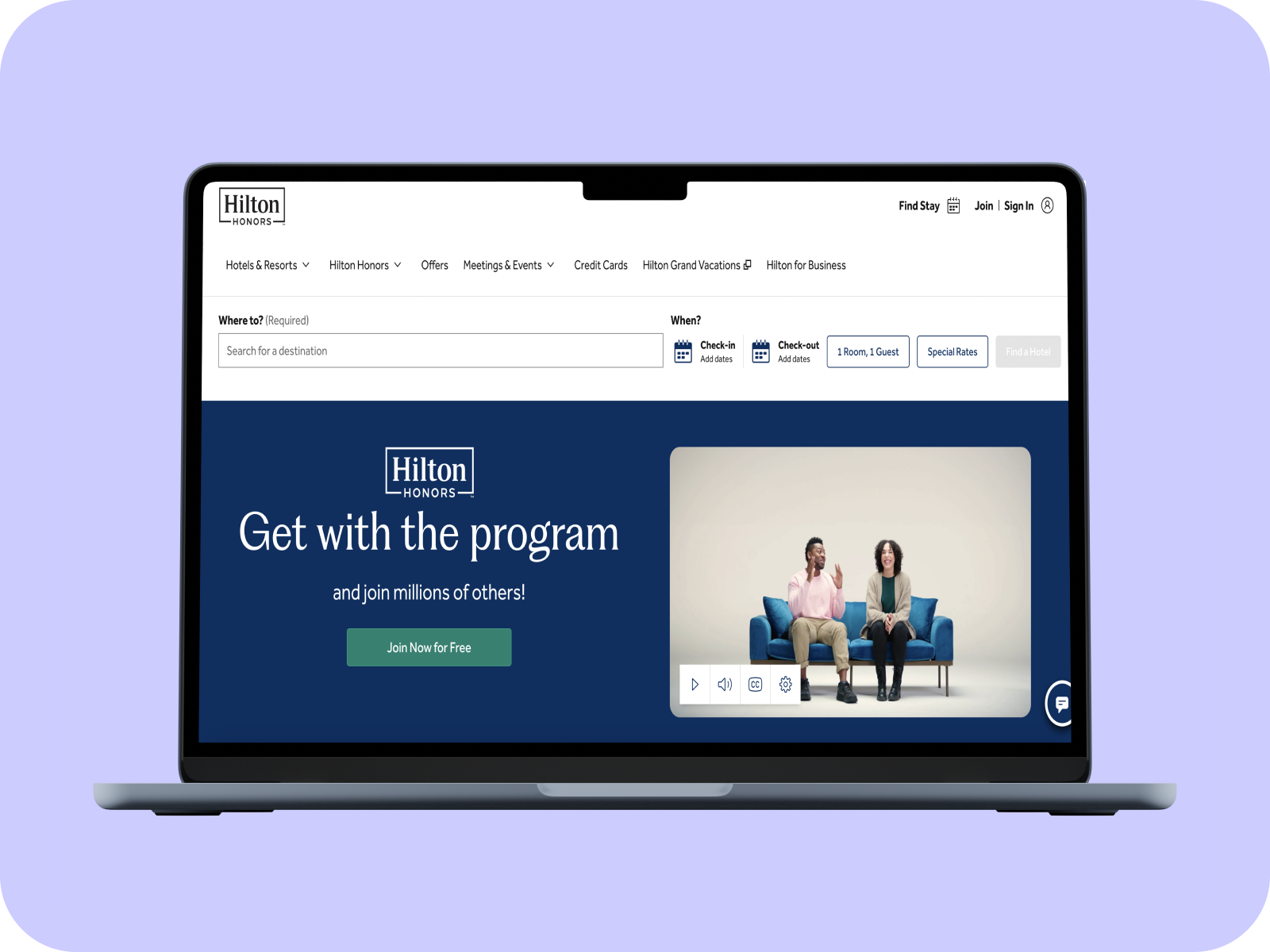
This UX research project uncovers user behaviors and motivations within the Hilton Honors loyalty booking program, revealing actionable insights that drove improvements to member engagement and overall user experience.
Evaluative and Strategic Research
Main Goals
To understand user perceptions and motivations around booking for loyalty programs.
With the goal of uncover challenges and key drivers, informing design decisions that enhance the user experience and program appeal.
Methodology & Procedure
Moderated Usability Study
6 participants Recruited
45 min Sessions
User Interviews
Affinity Diagram
Data Analysis
Recruited Participants
Individuals with prior experience at Hilton properties who have not yet enrolled in the loyalty program.
Online Travel Agency (OTA) customers (e.g., Kayak, Booking.com) who can be converted to direct bookings through loyalty perks.
Frequent guests, both corporate and personal, who consistently choose accommodations across the Hilton portfolio (including affiliated brands).
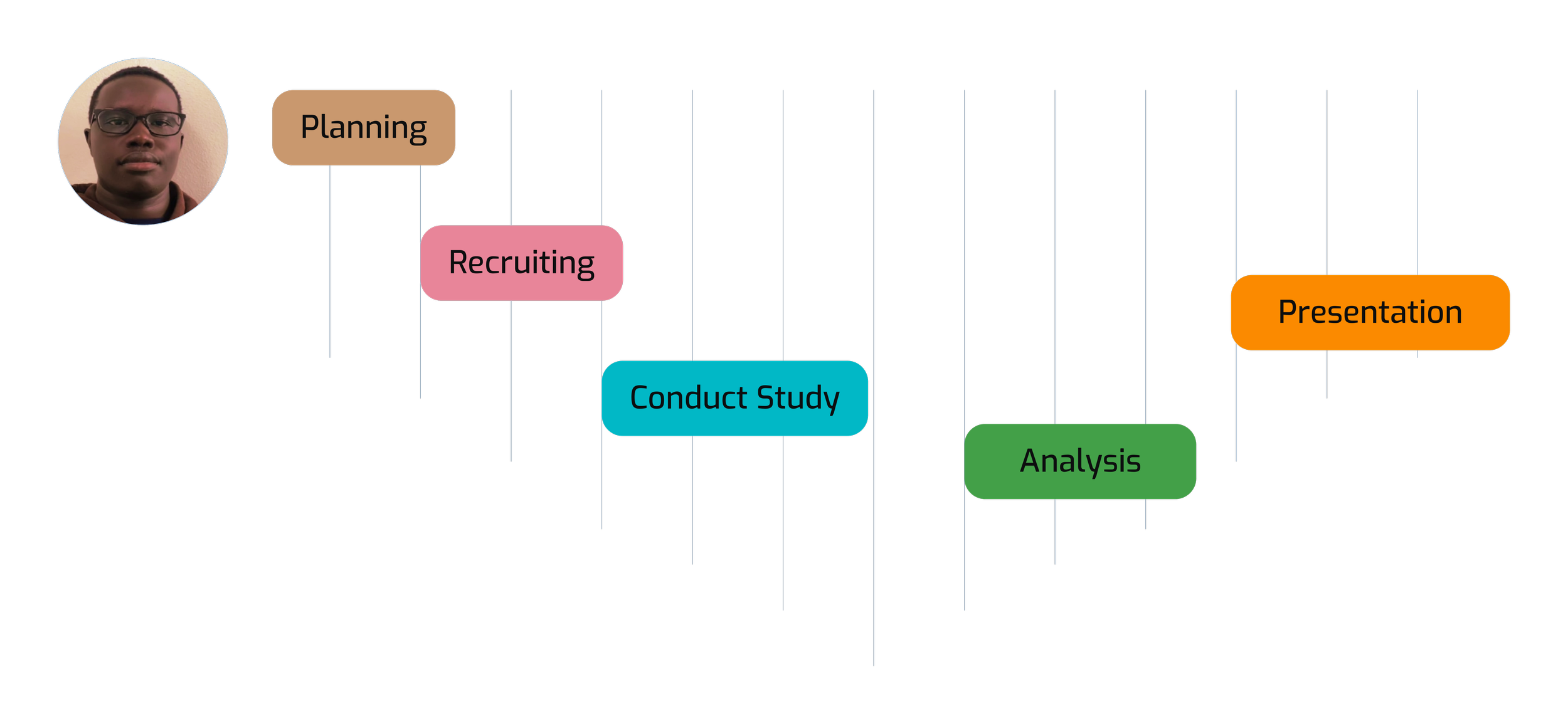
My Role
Process & Challenges
Resolving Internal Differences
As a team, we had disagreements on the best approach for conducting the usability testing, with some advocating for virtual sessions for convenience and broader reach, while others preferred in-person testing for deeper insights and engagement. After thorough discussions and weighing the pros and cons of each method, we recognized the value in both approaches. To resolve the disagreement, we implemented a hybrid model that allowed researchers to choose between virtual and in-person interviews, ensuring flexibility while maintaining research quality.
Strengthening Collaboration
To address this, I invited stakeholders to observe recorded sessions. This provided an opportunity for us to discuss ongoing challenges, potential product decisions, and key data points that weren’t covered in the initial briefing.
I conducted sessions and analyzed data to extract valuable insights:
By identifying patterns and recurring themes across sessions, I was able to translate raw user feedback into actionable findings that directly shaped the direction of the Hilton Honors project.
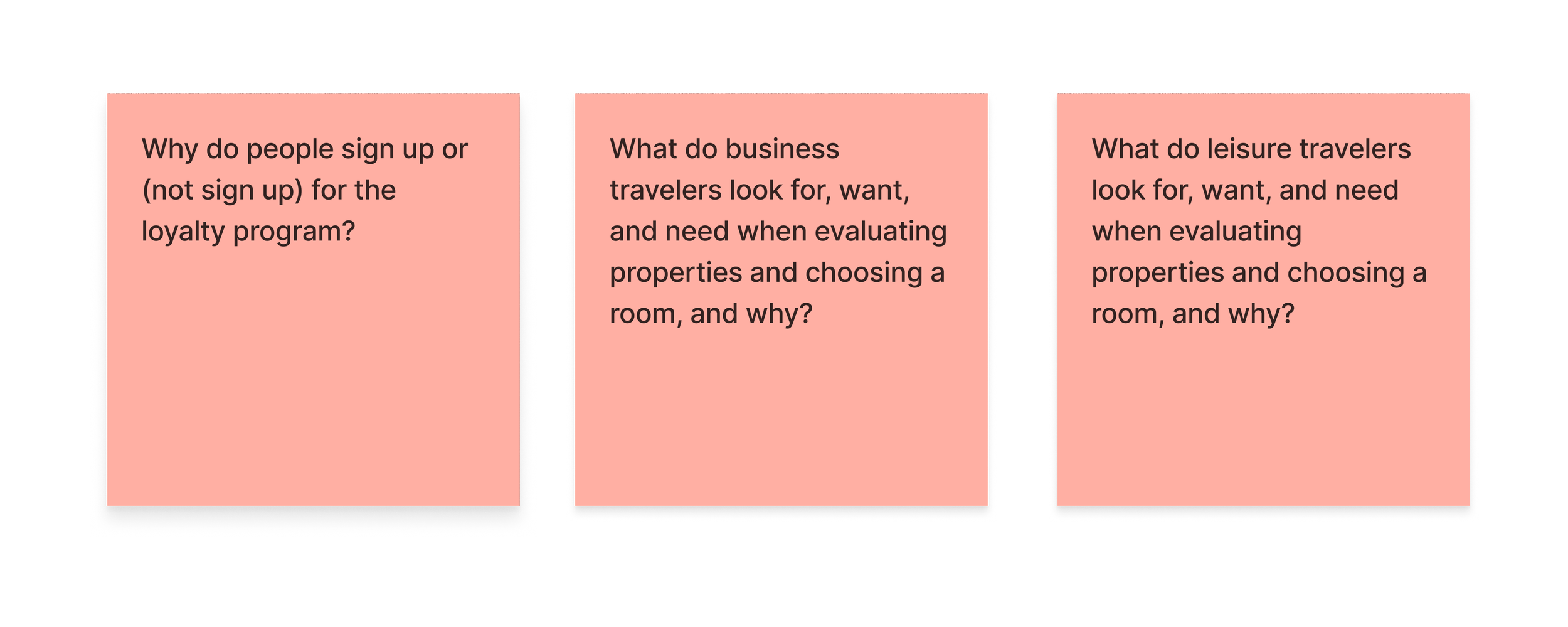
Research Sessions
Research Profiles
Audience Type
Mobile and desktop users who prioritize efficiency and simplicity in account registration workflows.
Screening & Initial Discovery
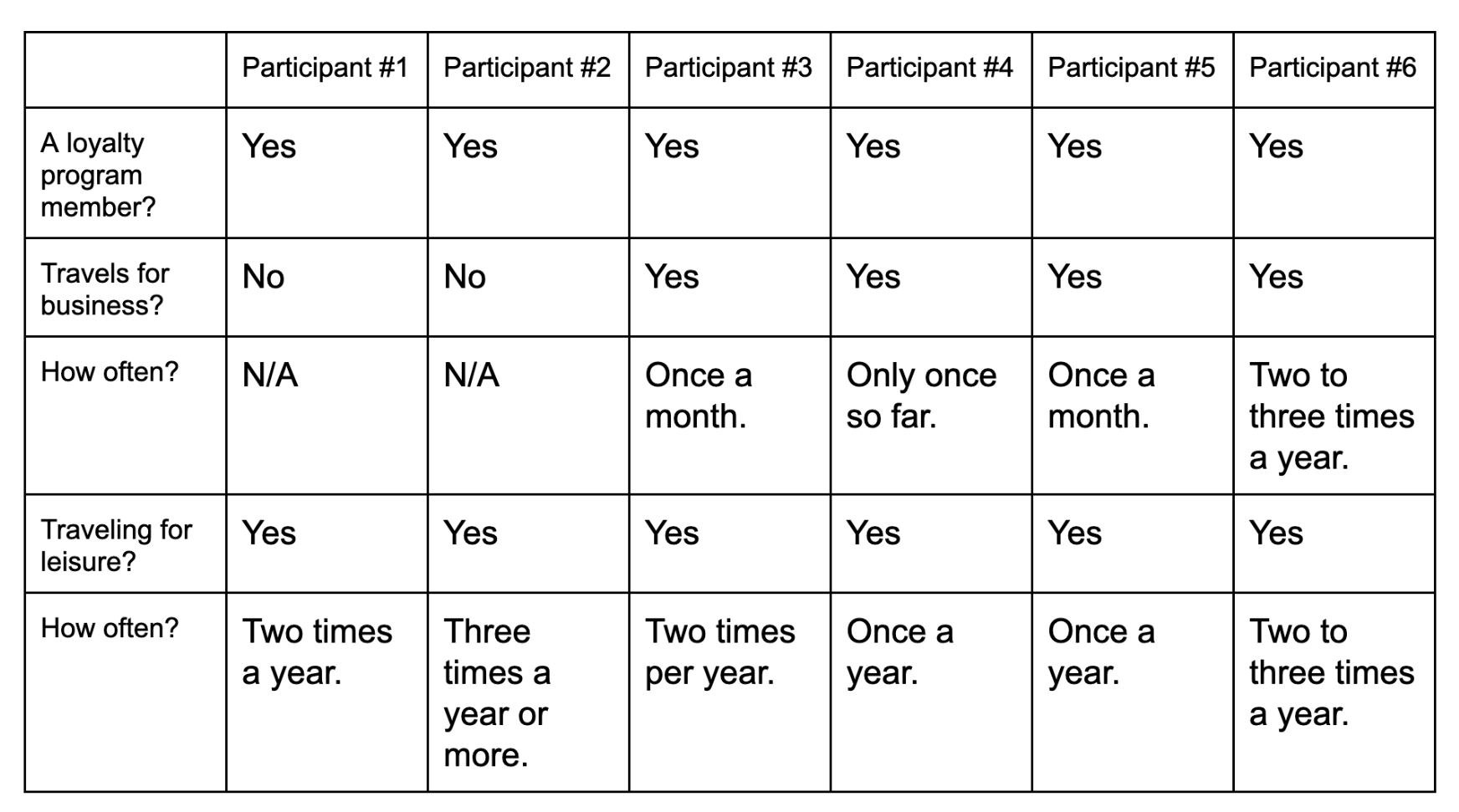
To qualify participants and establish a baseline understanding of their travel behaviors, we began each session with a series of screening questions. Participants were asked whether they travel for business, personal purposes, or both, as well as how frequently they travel per year. This allowed us to segment our audience, ensure relevance to the research goals, and uncover initial patterns in travel habits before diving deeper into the core research questions.
User Interviews
When conducting interviews with participants, many reported positive experiences; however, some expressed dissatisfaction with the Hilton Honors membership sign-up process. Participants highlighted key aspects such as the ease of booking and the value of membership perks. Additionally, feedback revealed areas for improvement, particularly in streamlining the sign-up process to enhance the overall user experience.
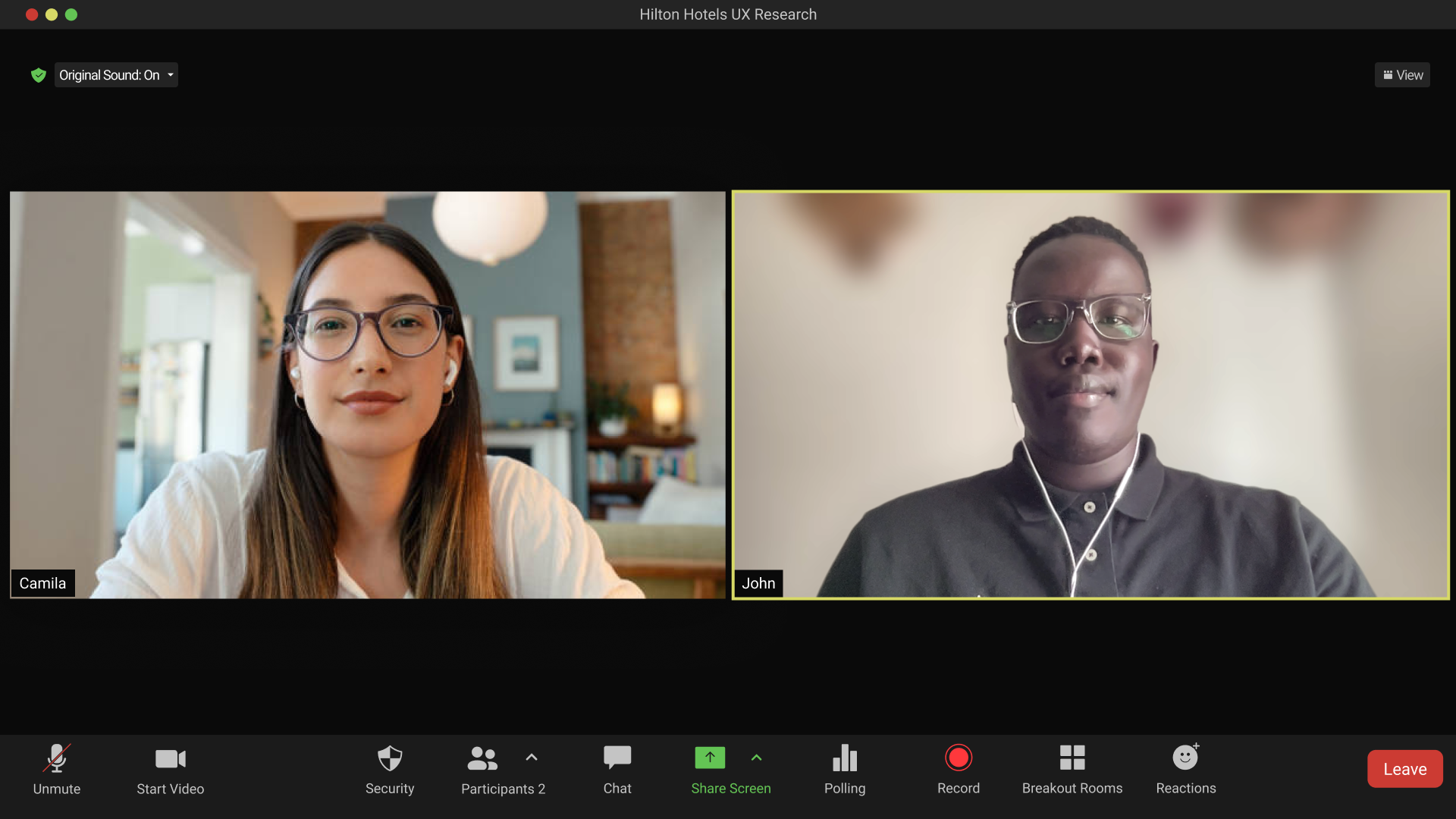
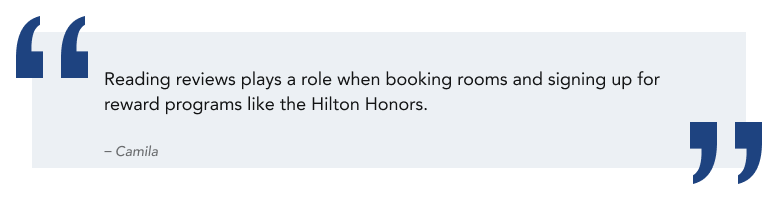
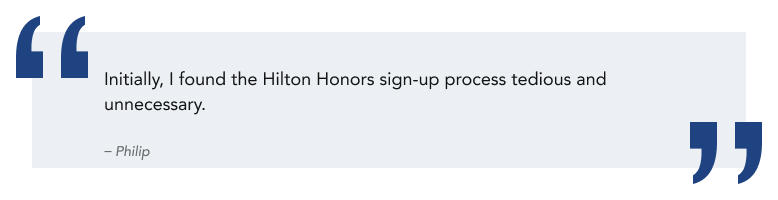
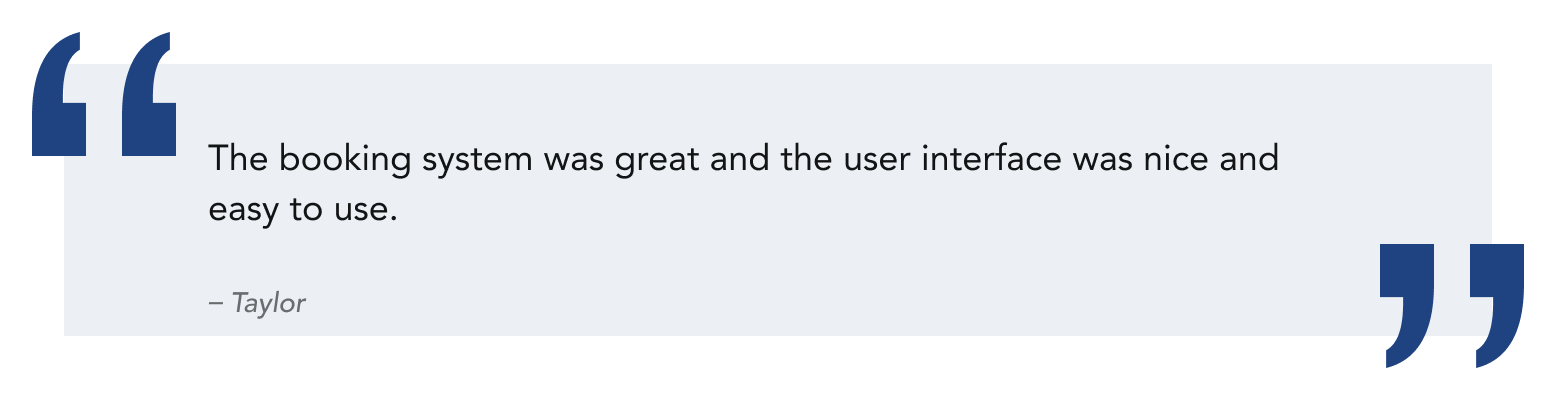
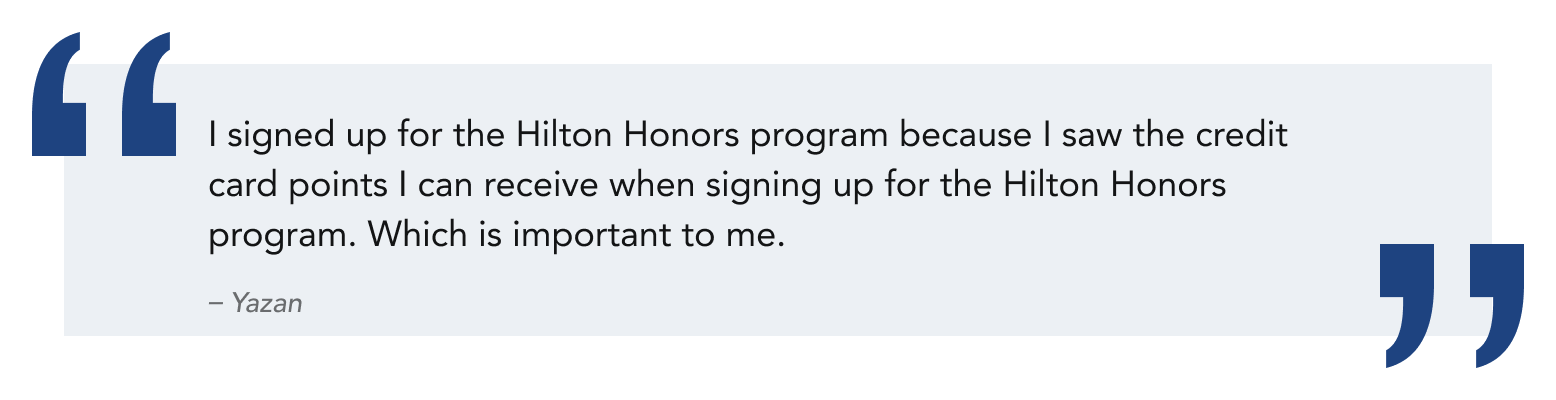
The following quotes are drawn from user interviews and usability studies on the Hilton Honors sign-up process. Participants were recruited across a range of demographics, travel frequencies, and levels of familiarity with loyalty programs.
Affinity Diagram & Data Analysis
Affinity Diagram
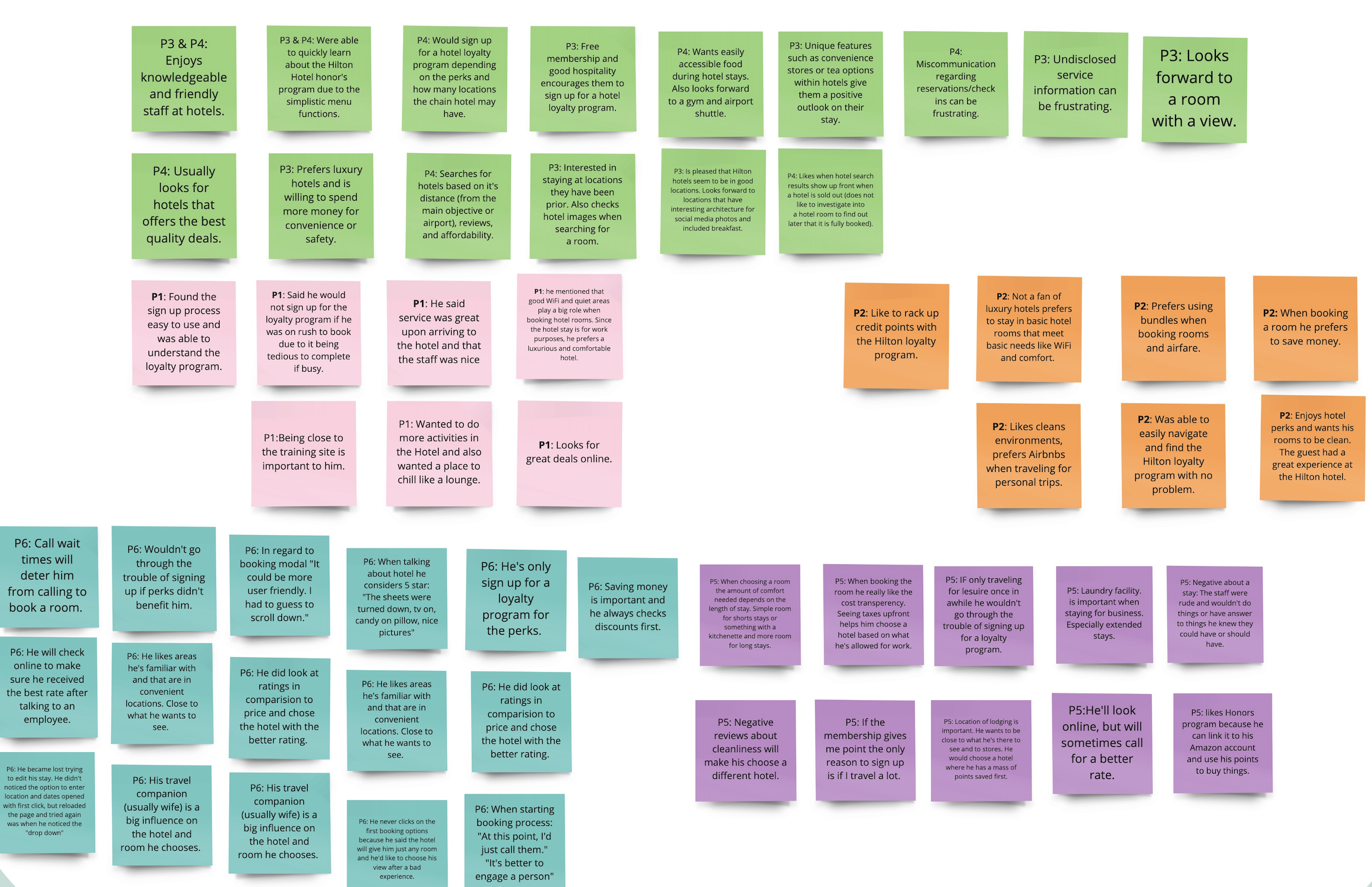
After wrapping up our user interviews, we held an affinity mapping session to organize and make sense of everything we heard from participants. We grouped common themes, frustrations, and behaviors together to spot patterns across users. This helped us move from pages of notes into clear, meaningful insights that reflected what users actually experienced. The affinity diagram then guided the direction of our study and helped us identify the most important problems to focus on.
Data Analysis
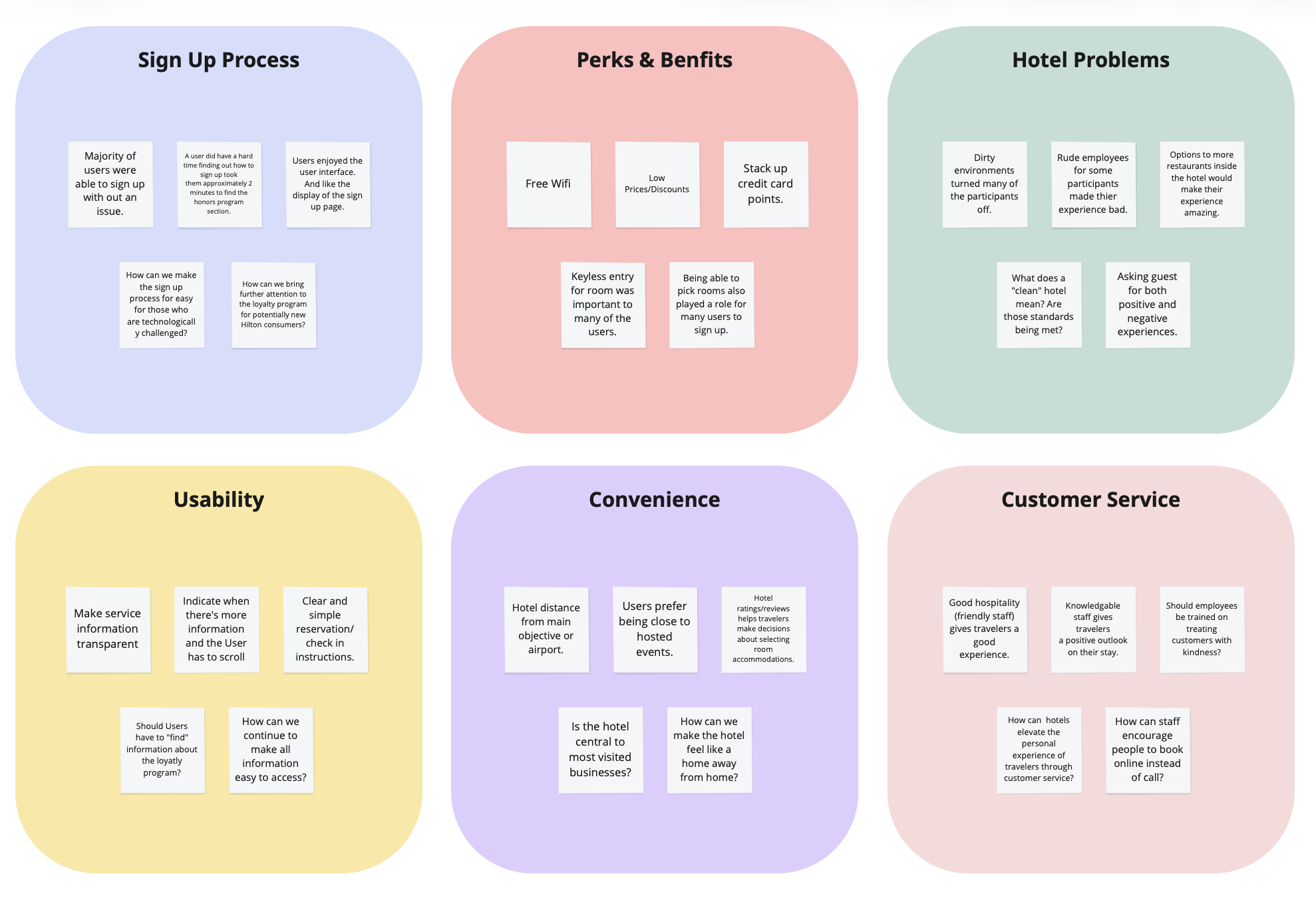
For the data analysis phase, we synthesized the group insights to identify core problems by summarizing the key patterns and recurring concerns that emerged from our research. This structured organization of data allowed us to surface meaningful connections across user experiences, revealing themes that might have otherwise gone unnoticed. These findings proved vital in shaping our key discoveries and guiding the direction of our design decisions for the Hilton Honors project.
Key Findings & Recommendations
Key Findings
Users often abandon the process when faced with too many required fields, especially on mobile devices. The lack of autofill options and progress indicators further contributes to frustration, making the experience feel tedious and unnecessary. Simplifying the form by prioritizing essential information first and offering a seamless autofill option could significantly improve completion rates.
Confusing Loyalty Tiers and Rewards
Some users find the honors loyalty program confusing, making them unsure of the benefits they’ll receive.
The tier structure uses hospitality jargon (Silver, Gold, Diamond,Diamond Reserve) without clearly explaining what each level unlocks or how to achieve it. Some users interviewed expressed they "signed up blind" without understanding if the program was worth their time
Lack of Immediate Value Proposition
Users don’t immediately see good benefits during the sign-up process, reducing motivation to continue.
First-time visitors lack social proof or testimonials from existing members during sign-up, making the program feel impersonal and unproven.
Mobile & Desktop Interface Issues
The mobile and desktop experience has usability issues, such as small touch targets and unclear CTAs, leading to frustration.
Usability gaps across mobile and desktop interfaces are directly hurting sign-up rates, making a redesign essential to improving the overall user experience and driving higher enrollment.